




Referrals hit a dead end
Somebody recommends the designer, the prospect searches the name, and finds nothing. In a category where the entire decision rests on seeing previous work, an empty search result loses the lead the referral just earned.
No website, no photographs, no search presence — an interior design practice built from an empty folder.
0 to live
Full digital presence
Site, portfolio and enquiry flow
8-12
Enquiries per month
Steady by month four
4:10
Average time on portfolio
People read the projects
Self-served
Project publishing
New projects added without a developer
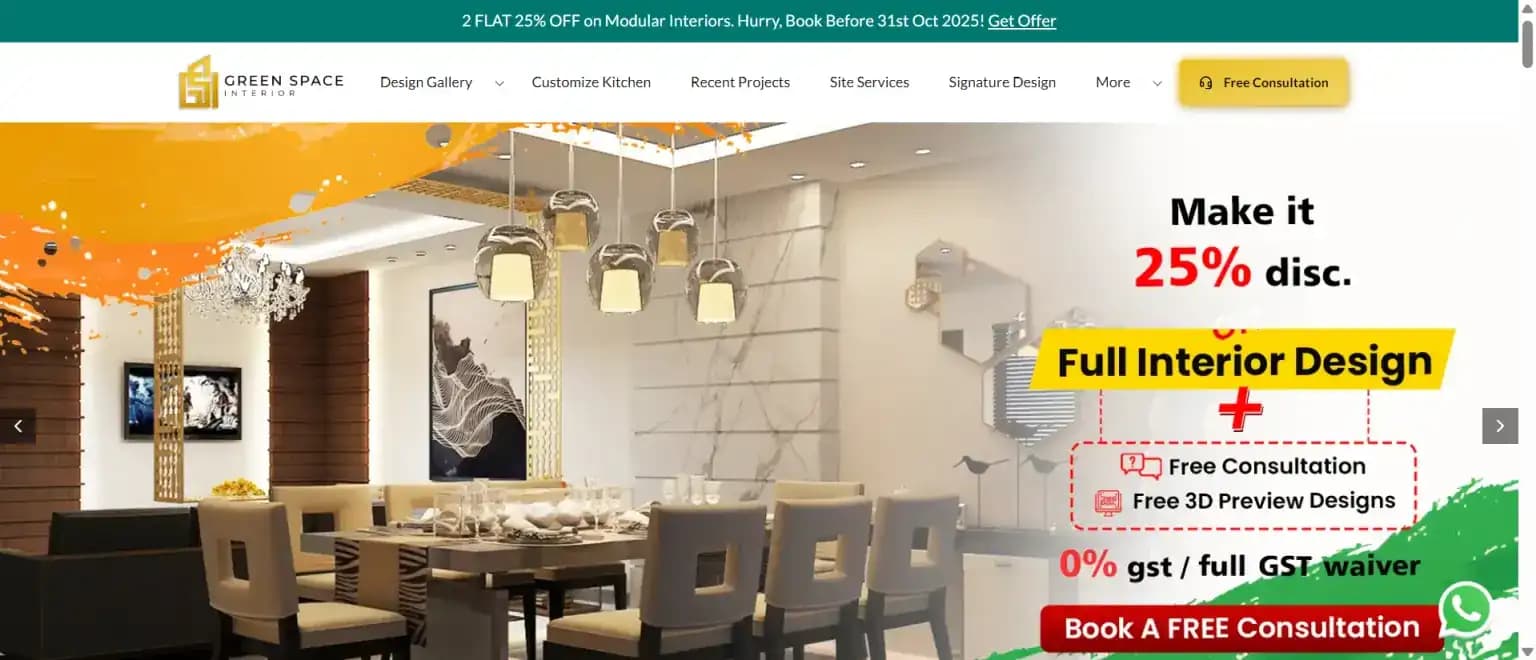
Green Space Interior had completed work and word-of-mouth referrals, but nothing online. Prospective clients who heard the name found nothing, and the business could not show finished projects to anyone it had not met. We built the digital foundation from scratch: a dynamic Next.js website with a project portfolio system, structured around the way people actually choose an interior designer.
The gaps in Green Space Interior's setup before the project started — and what they were costing.
Somebody recommends the designer, the prospect searches the name, and finds nothing. In a category where the entire decision rests on seeing previous work, an empty search result loses the lead the referral just earned.
Finished projects existed only as phone photos in a chat. There was no consistent way to present a project — brief, space, materials, outcome — which is exactly what a client wants to see before trusting someone with their home.
Without a site there was no place for content, no analytics, and no asset that would keep working. Every enquiry had to be personally generated, every time.
Each phase closed before the next one opened, so nothing was rebuilt twice.
Who the practice is for, which project types it wants more of, and the price positioning it should signal. Those answers decided the visual direction and which work to lead with — starting from design would have been guesswork.
Every project presented the same way: brief, space and constraints, approach, materials, and finished photography. A consistent structure makes a small portfolio read as a body of work rather than a scatter of pictures.
Dynamic project pages driven by a portfolio system the team updates themselves, a service explanation that sets expectations on process and budget, and an enquiry form that captures space type, area and timeline.
Analytics showed visitors going to the portfolio before anything else, so the home page was reorganised to lead with projects and the service copy moved below it.
New projects are published from the admin without a developer, so the site keeps growing with the practice instead of ageing from the day it launched.
See the work, understand the process and budget expectations, then enquire. The site is ordered the way the decision is actually made.
Space type, approximate area and timeline arrive with the enquiry, so the first call is a real conversation about scope rather than a qualification round.
Every tool here was picked for a reason — speed, reporting, or one less manual step.
Dynamic project pages that load fast and index properly
Portfolio, gallery and enquiry components
One typed project model across admin and site
Clean, image-led layouts across breakpoints
Portfolio admin and enquiry API
Projects, categories and enquiries
Fast delivery of a photography-heavy site
Which projects lead to enquiries
The part that matters: what the business could do afterwards that it could not do before.
The person who searches the name after a recommendation finds a body of work. The referral finishes the job it started instead of dissolving at a blank search page.
A steady 8-12 enquiries a month arrive without anyone personally chasing them, which changes what the practice can plan for.
Every completed project published adds another page of proof and another entry point from search, so the site is worth more each quarter rather than less.
| Measure | Before | After |
|---|---|---|
| Online presence | None | Full site with portfolio system |
| Showing previous work | Phone photos over chat | Structured project pages |
| Monthly enquiries | Referral only, irregular | 8-12 per month |
| Publishing a new project | Not possible | Self-served in minutes |
“Before this, people who heard about us found nothing. Now they see the work first and call already knowing what we do.”
A complete digital presence from scratch — a dynamic Next.js website, a project portfolio system the team publishes to themselves, service and process content, and an enquiry flow capturing space type, area and timeline, with analytics from launch.
Ten weeks: two on brand positioning and project selection, two on the project template, five on the build, and one on launch — followed by a round of changes based on how visitors actually moved through the site.
Yes. The portfolio is admin-driven, so a completed project goes live without developer involvement. That was a requirement, not an extra — a design portfolio that cannot be updated stops being useful within a year.
Yes. Portfolio-led practices share the same structure: work first, process second, enquiry third. Positioning and project templates are worked out per practice.
 Education
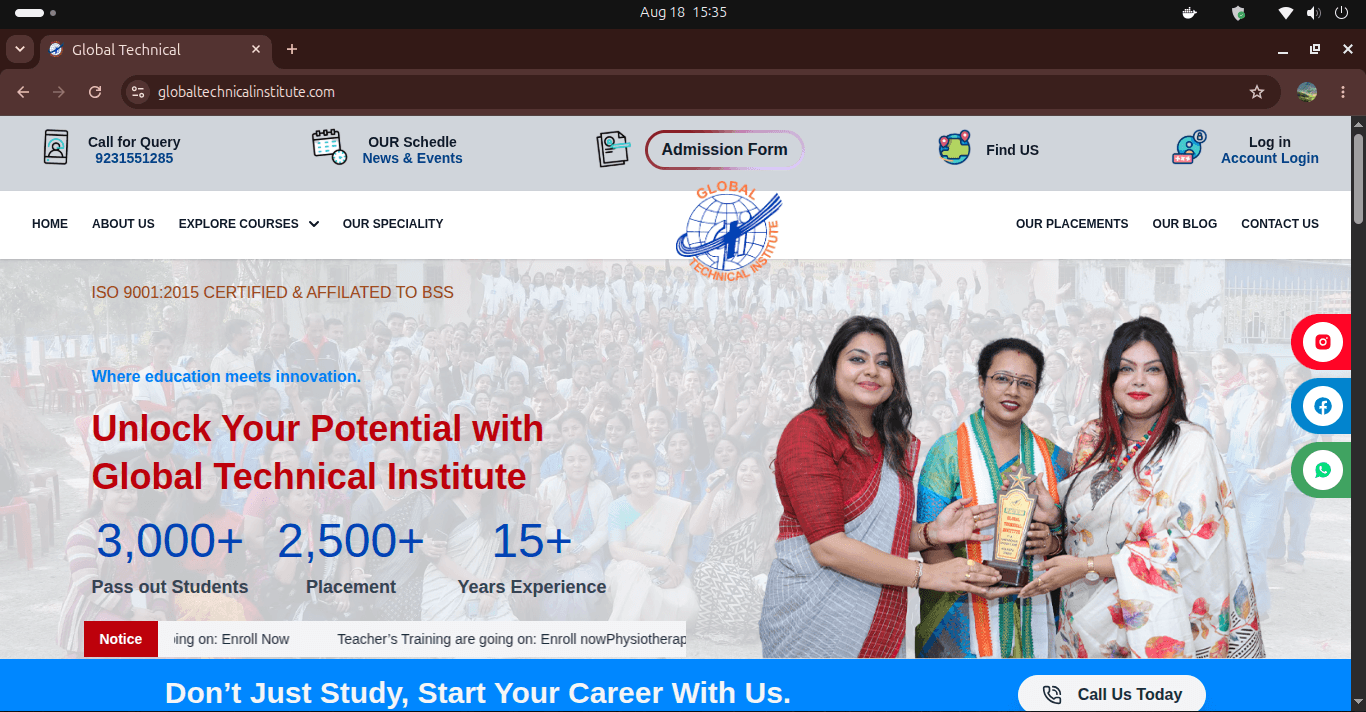
Global Technical Institute ran admissions on paper files and scattered Excel sheets. Enquiries, counselling notes, documents and fee records lived in different places, so nobody could say where an applicant stood or how the institute was performing without hours of manual checking.
We built a custom CRM that holds the entire admission journey in one system — enquiry capture, counselling stages, document uploads and follow-up reminders — paired with a fast Next.js website. An advanced reporting layer sits on top, breaking down admissions, course-wise intake and fee collection. Staff stopped rebuilding the same data by hand, every applicant is traceable at a glance, and management can analyse admissions and revenue from live reports instead of guesswork.
 Travel & Adventure
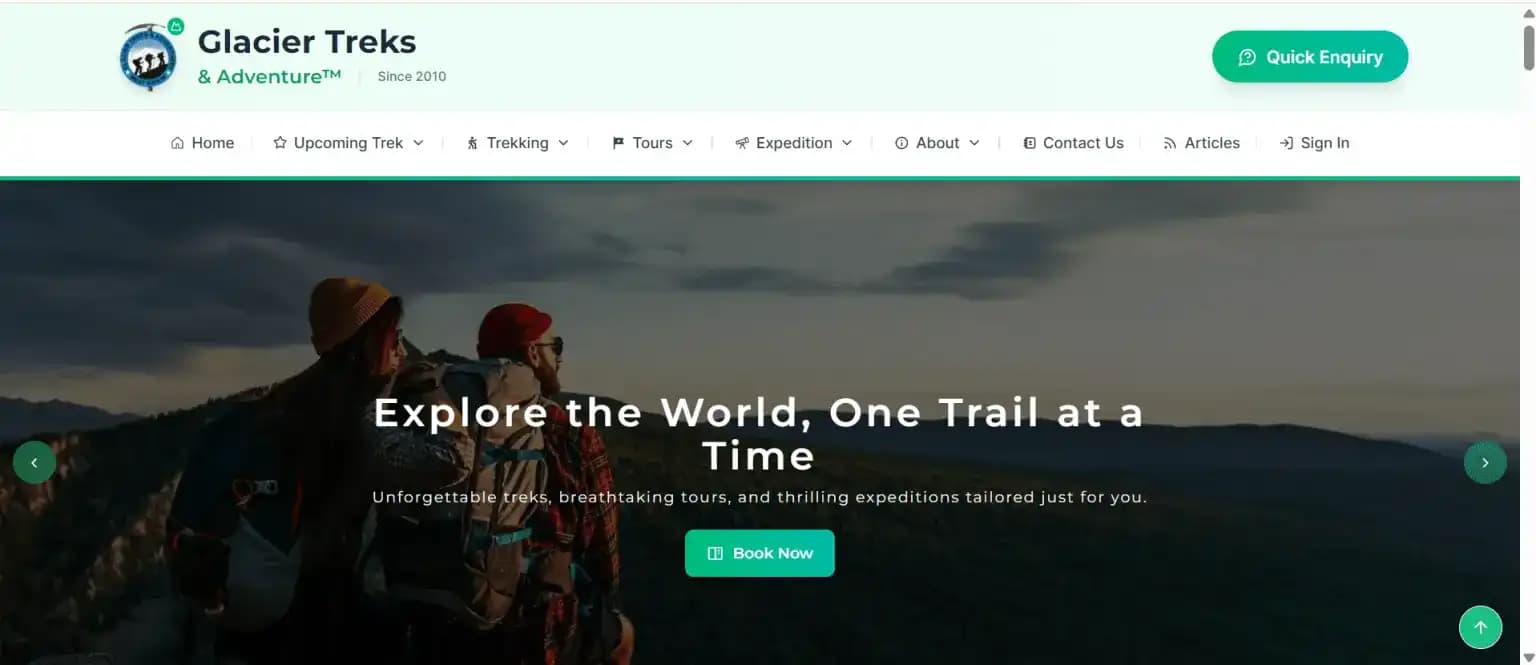
Glacier Treks & Adventure needed a fast, modern website to showcase trek packages and convert interested travelers into bookings. Their earlier platform was slow and did not effectively highlight routes, itineraries, or booking details.
A dynamic Next.js website improved loading speed, visuals, and navigation so users could browse treks effortlessly. Clear itineraries, photography, and inquiry paths strengthened the experience. Engagement improved, booking requests increased, and the brand is now positioned as a reliable trekking service provider.
 Education
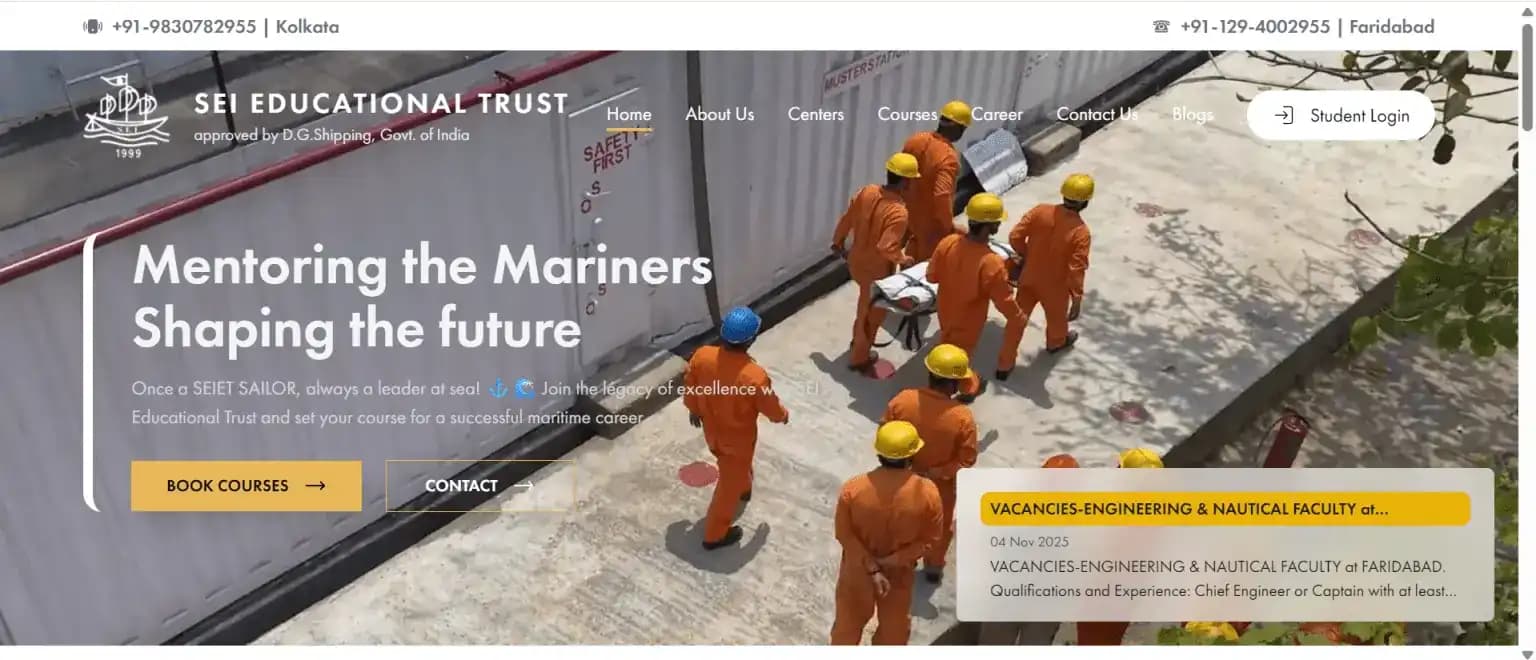
SEI Educational Trust needed a streamlined digital system to manage student inquiries and present their courses professionally. Their previous setup lacked speed, structure, and proper lead management.
A high-performance Next.js website improved navigation, course discovery, and the application flow. A custom CRM automated lead tracking, counseling stages, document uploads, and follow-up reminders. The integration reduced manual workload, increased response speed, and created a smooth end-to-end admission journey — resulting in more completed applications and improved enrollment efficiency.
Tell us what is slowing the business down. We will map the fix before you commit to anything.
Copyright © 2026 OMM Digital Solution Pvt. Ltd.